

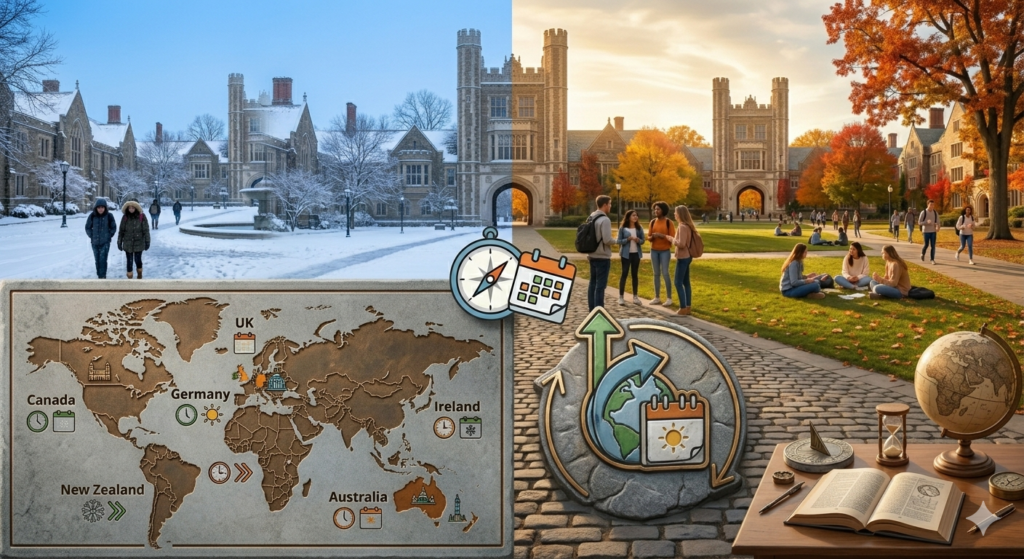
🚨 Stop! Read This Before You Apply for September 2026 or January 2027
It’s April 2026. If you’re an Indian student planning to study abroad, you’re standing at a critical crossroads right now. The September 2026 intake — the biggest intake of the year — is just around the corner. And if you miss it, the next option is January 2027 intake. Every week of delay is a deadline missed, a scholarship lost, a dream postponed.
The truth? There is no universally ‘better’ intake. The January vs September intake debate isn’t black and white — it depends entirely on your academic profile, your budget, your target country, and how much time you have to prepare.
In this guide, we break down everything — key differences, pros and cons, country-wise intake calendars, step-by-step timelines, and a clear decision framework — so you can choose between September 2026 intake vs January 2027 intake with full confidence. Let’s get started! 🌍
January vs September intake is one of the most important decisions for Indian students planning to study abroad in 2026–2027.
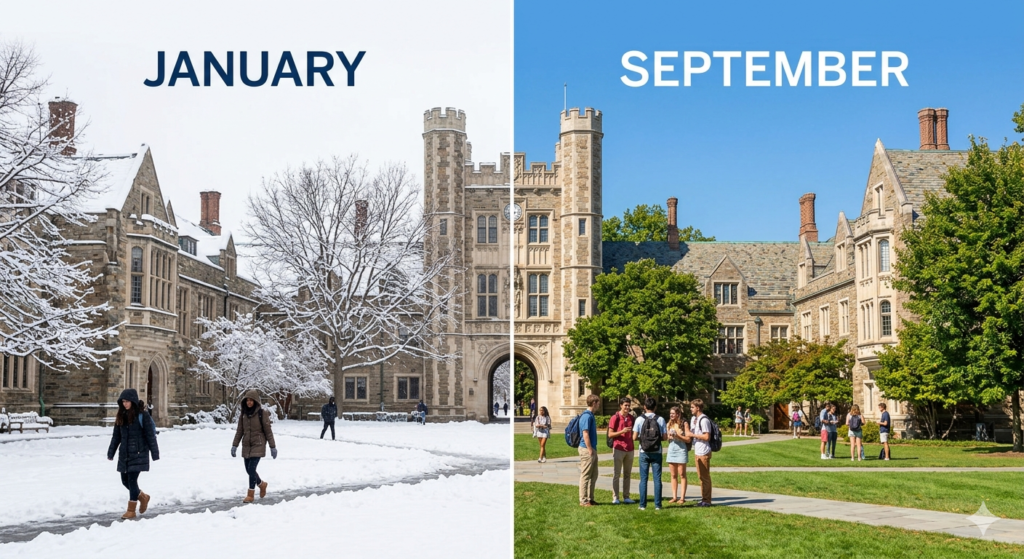
✅ January vs September Intake: What is the Difference?
When universities around the world open admissions, they do it in scheduled windows called intakes (also called sessions or semesters). Think of them as the doors to your international education — each door opens at a specific time of year.
The Three Main Intakes Globally:
- September Intake (Fall Intake) — The biggest and most popular intake. Universities open in August–September. This is available in virtually all countries and universities worldwide.
- January Intake (Winter/Spring Intake) — The second intake, starting in January–February. Not all universities offer this, but it’s a great alternative. Since January 2026 has already passed (it’s April 2026 now!), the next January intake is January 2027.
- May Intake (Summer Intake) — The smallest intake, offered by select universities mainly in Canada, Australia, and the UK. Very limited courses available.
For Indian students right now (April 2026), the main decision is between September 2026 intake (applications closing soon!) and January 2027 intake (for those who need more prep time). The May 2026 intake is generally not recommended as a primary choice due to its very limited course availability.
⚡ January 2027 Intake vs September 2026 Intake: Key Differences at a Glance
Here’s the most important table you’ll read before making your decision right now in April 2026:
Factor | January 2027 Intake 🌨️ | September 2026 Intake 🌤️ |
Application Deadline | September – October 2026 | April – June 2026 (NOW — act fast!) |
Classes Begin | January – February 2027 | August – September 2026 |
Universities Available | 30–40% of all universities | 90–100% of all universities |
Course Availability | Limited (mainly popular courses) | Maximum (all courses available) |
Competition Level | Lower – easier to get in | High – most students apply here |
Scholarship Options | Fewer – limited institutional aid | Maximum – most scholarships open |
Admission Speed | Faster (less competition) | Moderate (higher application volumes) |
Ideal For | Students needing more prep time | Students ready to apply now |
Countries Available | Canada, UK, Australia, NZ, Ireland | All countries worldwide |
IELTS/PTE Prep Time | 4–6 months remaining (comfortable) | 1–2 months (urgent — start NOW) |
Visa Processing Time | Comfortable buffer from Oct 2026 | Tight — apply visa by June–July 2026 |
Part-time Work (Canada) | Full rights from Day 1 | Full rights from Day 1 |
🌨️ January 2027 Intake: Honest Pros & Cons for Indian Students
Since January 2026 has already passed, the next January intake is January 2027. Here’s what it offers — and where it falls short.
✅ Pros of January Intake
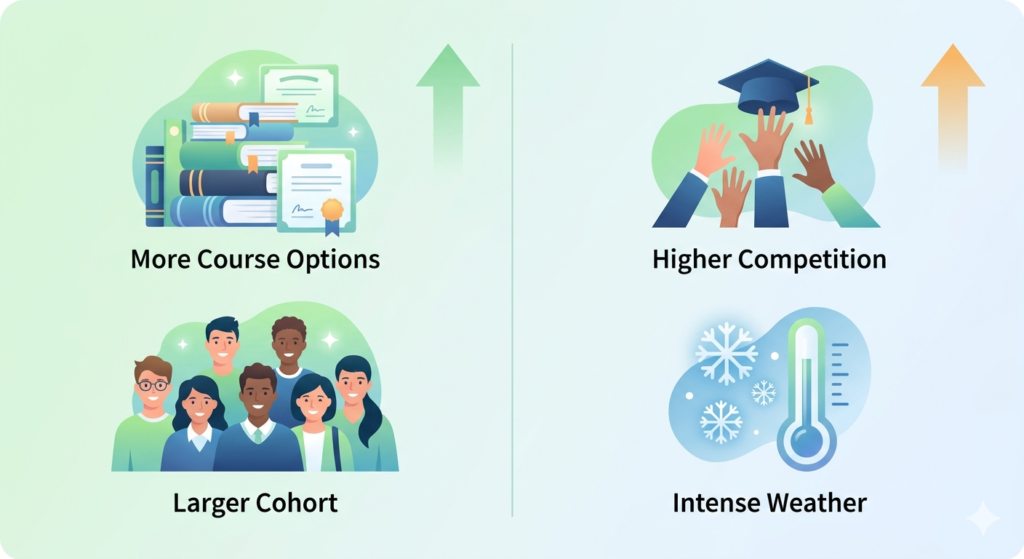
- Less Competition: Fewer Indian students apply in January. This means universities have more seats available per applicant. If your profile isn’t the strongest, January gives you a genuine edge.
- Faster Admissions: With lower application volumes, universities process files quicker. Many students get offers within 2–4 weeks vs. 6–10 weeks in September.
- Great for Gap Year Students: If you graduated in 2024 or 2025 and missed the September 2026 intake, January 2027 is your fastest path to studying abroad without waiting a full year.
- Lower Chance of Rejection: Admission cutoffs can be slightly more flexible in January for many universities in Canada and Australia.
- Earlier Career Start: Graduating in December/January instead of May/June puts you ahead of the September cohort in some job markets.
❌ Cons of January Intake
- Limited Universities: Only about 30–40% of universities worldwide offer a January intake. Your options are genuinely narrowed, especially in Germany and Europe.
- Fewer Scholarships: Most merit scholarships and government-funded awards are tied to the September cohort. January applicants often miss out on significant funding.
- Limited Course Options: Niche or specialized programs may not have a January start. If you want a specific course, it may simply not be available until September.
- Tight Timeline: Apply in Sep–Oct, get offer by Nov–Dec, get visa by December — it’s a very compressed timeline that leaves little room for error.
- Social Integration: Joining mid-year means most friend groups are already formed. The social start can feel slightly harder, though most universities manage this well.
🌤️ September 2026 Intake: Honest Pros & Cons for Indian Students
✅ Pros of September Intake
- Maximum Universities: 100% of universities worldwide participate. You can apply to literally any university, any country, any course — maximum choice is a huge advantage.
- More Scholarships: Almost all institutional scholarships, government scholarships (like GREAT Scholarship UK, Australia Awards, DAAD Germany), and merit bursaries are available for the September cohort.
- Maximum Course Options: Every program — from niche research courses to professional degrees — runs in September. You’re never limited by availability.
- Better Social Experience: The entire incoming class starts together. Orientation, clubs, networking events — everything is designed around the September intake. Social integration is much easier.
- Aligned with Indian Academic Calendar: Indian graduates finish exams in May/June, making September a natural and comfortable transition with time to prepare.
❌ Cons of September Intake
- High Competition: This is when the majority of Indian students apply. University seats are competitive, especially for top-ranked programs in Canada, UK, and Australia.
- Early Deadlines — We’re Already There: It’s April 2026 RIGHT NOW. Many top universities for September 2026 are closing applications this month. If you haven’t started, you need to act this week — not next month.
- Compressed Timeline: IELTS prep + application + offer letter + visa — all within April–July 2026. It’s doable but requires zero procrastination from today.
- IELTS/PTE Pressure: Getting exam-ready, scoring well, and meeting university deadlines all in a compressed window post-graduation is stressful.
🤔 September 2026 or January 2027: Which Intake is Right for YOU?
Here’s the answer no one gives you straight: the best intake is the one that matches YOUR situation right now. Since today is April 1, 2026, the September 2026 intake is urgent and closing fast. January 2027 gives you more breathing room. Let’s break it down by profile type.
👤 SCENARIO 1: You have 60–70% in graduation → January 2027 Intake is Better Many top universities in Canada and Australia are more flexible with January admissions. With lower competition, students with a slightly lower academic profile have a much higher chance of securing a good offer. It’s April 2026 now — use the next 5–6 months to prepare your IELTS and apply strong for January 2027. |
👤 SCENARIO 2: You have 75%+ and a strong profile → September 2026 Intake is Better You’re competitive — and September 2026 deadlines are open RIGHT NOW. Apply immediately with strong recommendation letters, SOP, and your IELTS score. Don’t waste your strong profile waiting for January 2027. |
👤 SCENARIO 3: You have a gap year (1–2 years) → January 2027 Intake is Better Don’t let another year go by. If September 2026 feels too rushed and your profile needs polishing, January 2027 is a strategic move — not a step back. Start applications from September 2026 onwards with zero stress. |
👤 SCENARIO 4: You’re a 2025–26 fresh graduate with a good score → September 2026 Intake is Better You have everything you need. It’s April 2026 — your graduation is fresh, your IELTS can be taken in May, and applications for September 2026 are still open at many universities. This is your moment. Act now. |
👤 SCENARIO 5: Budget is tight, scholarship is priority → September 2026 Intake is Better Almost all major scholarships — GREAT Scholarship (UK), Australia Awards, university merit bursaries — are tied to the September 2026 cohort. Apply now and maximise your funding opportunities. January 2027 has very limited scholarship availability by comparison. |
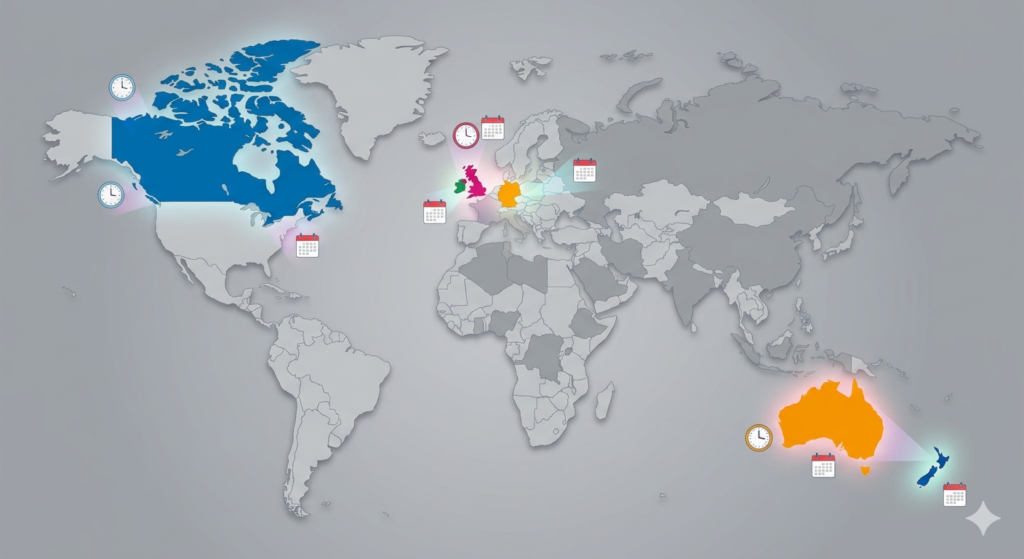
🌍 Country-Wise Intake Guide for Indian Students: September 2026 & January 2027
Different countries follow different academic calendars. Here’s exactly what’s available for you starting from April 2026:
Country 🌍 | Main Intake | Alt Intake Available? | Best Choice Right Now (April 2026) | Key Note |
🇨🇦 Canada | September 2026 | ✅ Jan 2027 (widely available) | September 2026 if ready; Jan 2027 if not |
|
🇬🇧 UK | September 2026 | ✅ Jan 2027 (limited unis) | September 2026 |
|
🇦🇺 Australia | Feb 2027 (Sem 1) | ✅ July 2026 (Sem 2 — apply NOW) | July 2026 if ready; Feb 2027 otherwise |
|
🇩🇪 Germany | October 2026 (WS) | ❌ Very limited | October 2026 (Winter Semester) |
|
🇳🇿 New Zealand | Feb 2027 (Sem 1) | ✅ July 2026 (Sem 2) | July 2026 if IELTS ready |
|
🇮🇪 Ireland | September 2026 | ✅ Jan 2027 (some unis) | September 2026 |
|
Pro Tip: For Australia and New Zealand, July 2026 (Semester 2) is essentially the ‘January intake equivalent’ — and those applications are open right now in April 2026. If you’re ready, this is an immediate opportunity!
📅 Step-by-Step Application Timeline: Starting From April 2026
⏰ September 2026 Intake — Action Plan (Starting NOW)
⚡ You are here: April 2026. This timeline starts TODAY.
Month | Action to Take |
April 2026 (NOW) | Book IELTS/PTE immediately — next available slot. Consult GlobalEd for FREE profile evaluation today. |
April – May 2026 | Finalise course + country + university shortlist. Start SOP and LOR drafts in parallel. |
May 2026 | Appear for IELTS/PTE exam. Target 6.0–7.0 band. Submit applications to universities as scores arrive. |
May – June 2026 | Receive and review offer letters. Accept preferred offer. Pay tuition deposit / confirm seat. |
June – July 2026 | Apply for student visa (Canada: SDS route; UK: Student visa; Australia: Subclass 500). |
July – August 2026 | Receive visa approval. Arrange accommodation, forex, travel insurance. Book flights. |
August – September 2026 | Arrive at destination. Attend orientation. Begin classes. Your new life starts here! 🎓 |
⏰ January 2027 Intake — Action Plan (For Students Who Need More Time)
✅ More relaxed timeline — but don’t waste these months!
Month | Action to Take |
April – May 2026 | Research courses and countries. Get a free counselling session with GlobalEd. |
May – June 2026 | Appear for IELTS/PTE. Take the time to score well — you have the buffer now. |
July – August 2026 | Finalise university shortlist. Draft and refine SOP. Collect LORs from professors/employers. |
September – October 2026 | Submit applications for January 2027 intake. Priority deadlines for top universities. |
October – November 2026 | Receive offer letters. Confirm enrollment. Pay tuition deposit. |
November – December 2026 | Apply for student visa. Canada GIC payment. UK/Australia visa applications. |
December 2026 – January 2027 | Receive visa. Book flights. Arrive and attend orientation. Classes begin! |
⚠️ Common Mistakes Indian Students Make with Study Abroad Intakes
These mistakes cost students months of time and thousands of rupees. Don’t let this be you:
- Mistake 1 — Thinking There’s Still Plenty of Time for September 2026: It’s April 2026. Many universities are closing September 2026 applications THIS month. Students who think they have until June will find the best courses and scholarships already gone. Act this week.
- Mistake 2 — Choosing the Wrong Intake for Their Profile: A student with 65% aggregate competing in the high-pressure September cohort often gets rejected and then waits until January 2027 anyway — losing 9 months. Knowing your profile early saves enormous time.
- Mistake 3 — Ignoring IELTS Timelines: IELTS slots fill up fast in April–May. Results take 13 days after the exam. Students who book late miss application deadlines entirely. Book your IELTS slot today — not tomorrow.
- Mistake 4 — Not Comparing January 2027 vs September 2026 Scholarships: Many students default to January 2027 without realising that September 2026 still has open scholarship windows. Missing these could mean paying lakhs more in tuition.
- Mistake 5 — Assuming All Universities Offer January 2027 Intake: Students shortlist 10 universities and discover only 3 offer January 2027. Always verify intake availability per university before building your list.
- Mistake 6 — Delaying Visa Application: For September 2026, visa applications should ideally be filed by June–July 2026. Canada SDS takes 4–8 weeks; UK Student visa takes 3–6 weeks. Apply the moment you have your offer letter.
- Mistake 7 — Going It Alone: Study abroad applications have multiple moving parts — IELTS, SOP, LOR, finances, visa. Students who work without a counsellor are 3x more likely to make avoidable, costly mistakes.
❓ FAQs: September 2026 vs January 2027 Intake for Indian Students
Q1: Which intake is better right now — September 2026 or January 2027?
Since it’s April 2026, September 2026 is the immediately actionable intake for students who are ready. If your IELTS is done or you can take it in May, apply for September 2026 now. If you need more preparation time or have a lower academic profile, January 2027 is the smarter, less stressful choice.
Q2: Is January 2027 intake risky for Indian students?
Not at all — if you plan well. January 2027 is a legitimate and widely accepted intake at hundreds of universities in Canada, UK, and Australia. The risk only arises when students rush applications with a weak SOP or insufficient IELTS score. With 9 months of prep time from today, you can apply for January 2027 with a very strong application.
Q3: Can I switch from September 2026 to January 2027 intake?
Yes, in most cases. If you apply for September 2026 and then face a visa delay or personal issue, many universities allow a one-time deferral to January 2027. Always confirm the deferral policy and any fee implications before paying your deposit.
Q4: What are the application deadlines for September 2026 intake?
As of April 2026, many universities still have open applications for September 2026 — but deadlines are closing fast. Some universities close by end of April, others by May–June. Contact GlobalEd today for a verified list of universities still accepting applications for September 2026.
Q5: Is IELTS required for both September 2026 and January 2027 intakes?
Yes. IELTS (or PTE/TOEFL) is required for both intakes at universities in Canada, UK, Australia, NZ, and Ireland. Germany requires it for English-taught programs. Some universities offer conditional offers allowing you to submit scores later — but it’s always better to have your score ready before applying.
Q6: Are there scholarships available for September 2026 intake?
Yes — and this is a major reason to target September 2026 if you’re ready. Most institutional merit scholarships, government-funded awards (GREAT Scholarship UK, Australia Awards, Ontario scholarships), and university bursaries are tied to the September cohort. January 2027 has far fewer scholarship opportunities.
Q7: Which countries offer the best options for Indian students in September 2026?
Canada, UK, and Australia offer the strongest September 2026 intake options for Indian students with clear pathways to work permits and PR. Germany’s October 2026 Winter Semester is ideal for STEM students. Australia’s July 2026 Semester 2 is also open right now for students who want to start sooner.
- Canada Study Visa Process for Indian Students – https://www.canada.ca/
- Study Abroad Scholarships for Indian Students 2026 -https://nosmsje.gov.in/
🚀 Ready to Choose Your Intake? Let GlobalEd Help You!
⏳ September 2026 Intake Is Closing — Don’t Miss It! |

🎓 Conclusion: September 2026 vs January 2027 — Make Your Move Today
The January vs September intake debate ultimately comes down to your profile, your goals, and your timeline. Both intakes are valid. Both lead to great universities and great careers. But they suit very different situations.
Choose September 2026 intake if you’re ready now — strong profile, IELTS done or achievable by May, and access to maximum universities, scholarships, and courses. Apply this month. Deadlines won’t wait.
Choose January 2027 intake if you need more time — to improve your score, build your profile, or simply prepare properly. It’s a strategic choice, not a consolation. Use these 9 months wisely and you’ll arrive with a stronger application than most September rushers.
The worst thing you can do in April 2026? Nothing. Every week of inaction is a deadline missed, a scholarship lost, a seat taken by someone else. Whether you’re targeting September 2026 or January 2027, your journey starts with one step — a free conversation with an expert who’s done this thousands of times.
At GlobalEd, we’re here to make sure you pick the right intake, apply to the right universities, and get your visa — the first time, every time. Book your free profile evaluation today and let’s get your study abroad journey started. 🌍🎓
─────────────────────────────────────────────────────────────────────
📍 GlobalEd Study Abroad Consultancy | Pitampura, Delhi | globaled.in | Free Profile Evaluation Available